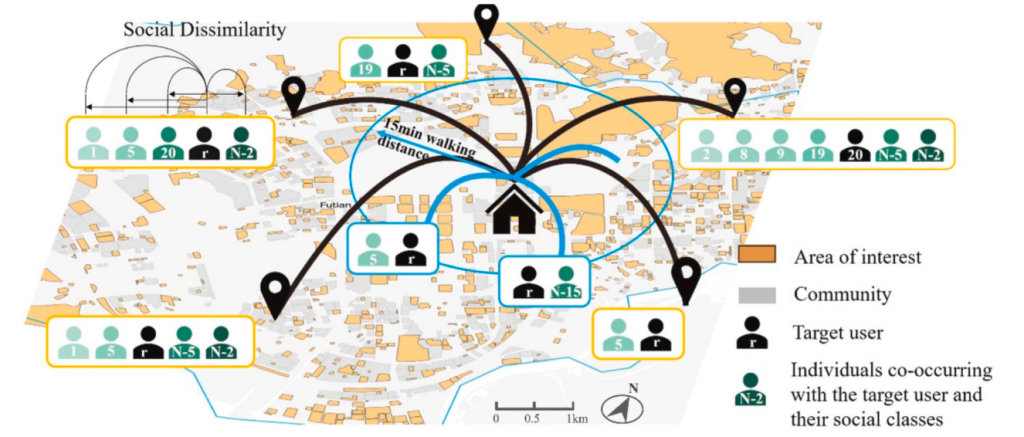
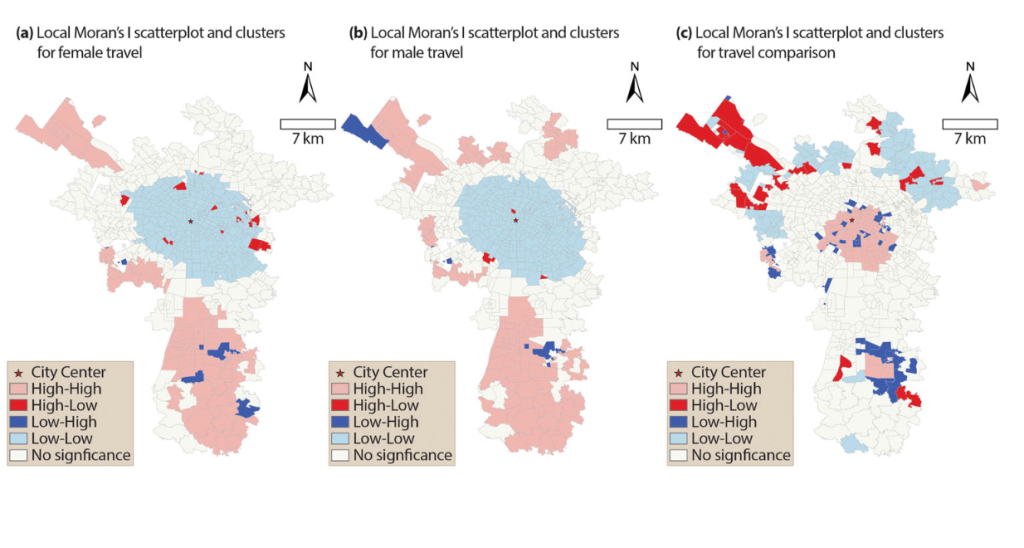
Using Shenzhen mobile-phone mobility data, this study shows that 15-minute living can deepen social segregation when daily activities stay within homogeneous neighborhoods. Density tends to strengthen this local “bubble” effect, while diverse amenities can weaken or reverse it, suggesting proximity matters only when paired with genuine functional mix.
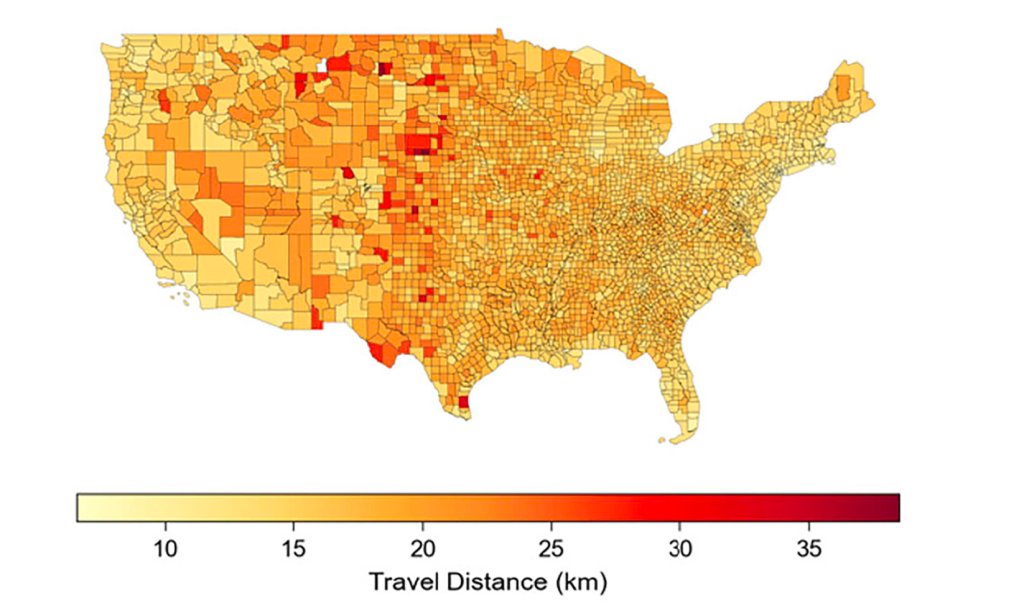
Cities are resilient when daily routines survive spatial change. Using U.S. county mobility data, this study shows that transit, drugstores, and religious facilities most shape essential-trip distances. Service density helps most at low levels, then brings smaller gains, while service loss hits vulnerable counties hardest, revealing resilience as lived accessibility.
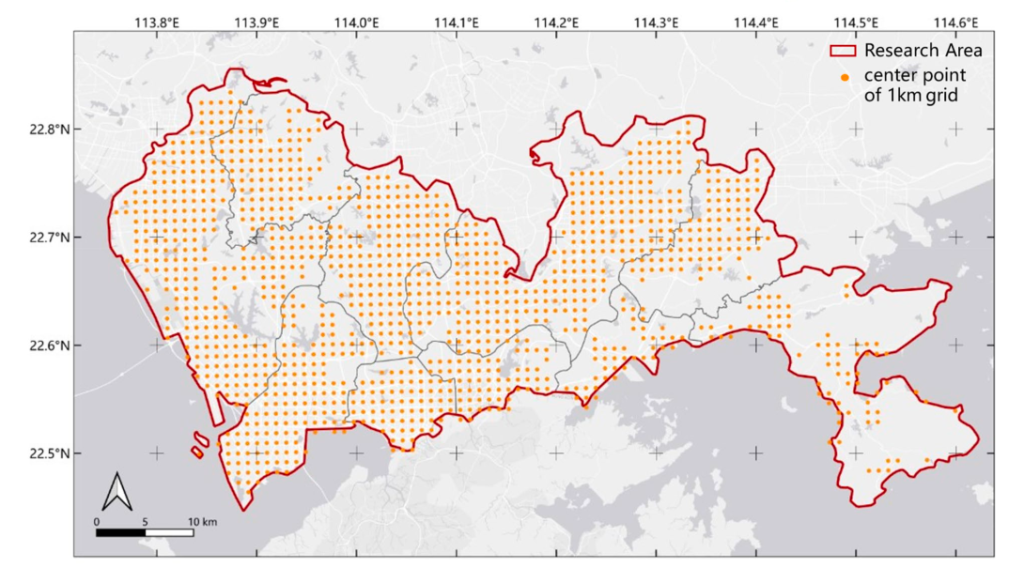
This study develops a multi-objective framework for locating UAM vertiports in Shenzhen, balancing coverage, connectivity, noise, and cost. Using high-resolution mobility and spatial data, it shows optimized sites greatly outperform random deployment, while core locations offer a practical starting point for phased, resilient urban air mobility planning.
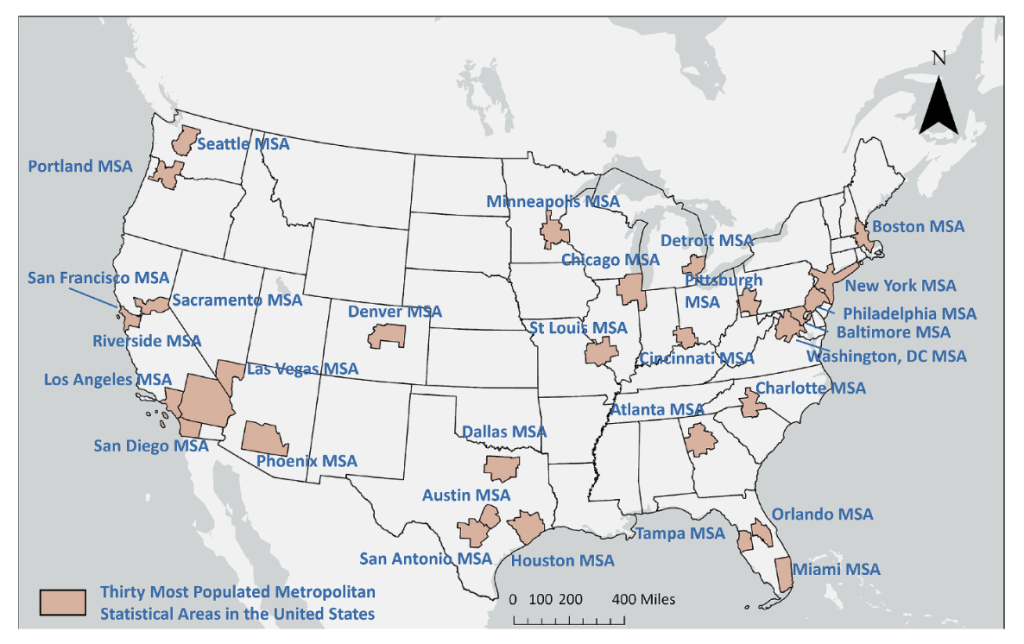
Using mobility data from 45 million devices, this study measures socio-spatial segregation across 30 major U.S. metropolitan areas. It shows that segregation varies sharply by social dimension and spatial pattern, meaning “high segregation” is not one condition, but a mix of who is separated and how that separation appears.
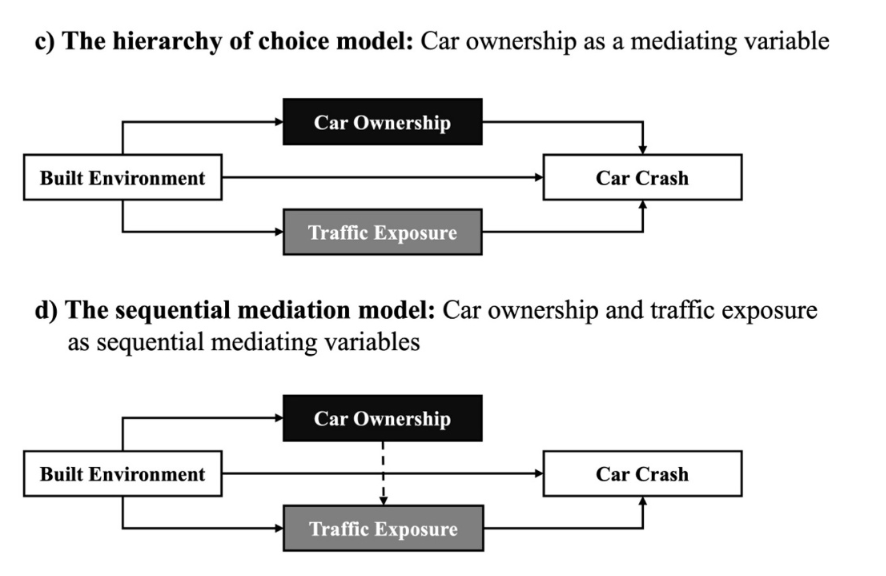
Using Chengdu crash and mobility data, this study shows that neighborhood design affects car crashes both directly and through car ownership. TOD-style environments—mixed land use, job–housing balance, and better transit access—can reduce crashes by discouraging car ownership, while also exposing hidden safety burdens in car-deficient neighborhoods.
Ride-hailing is not simply another form of car travel. Using POIs, mobile phone trajectories, and ride-hailing orders, this chapter shows that platform-based mobility interacts with urban functions in its own way. Its weaker links to shopping centers, airports, and metro stations suggest the need for planning approaches tailored to ride-hailing systems.
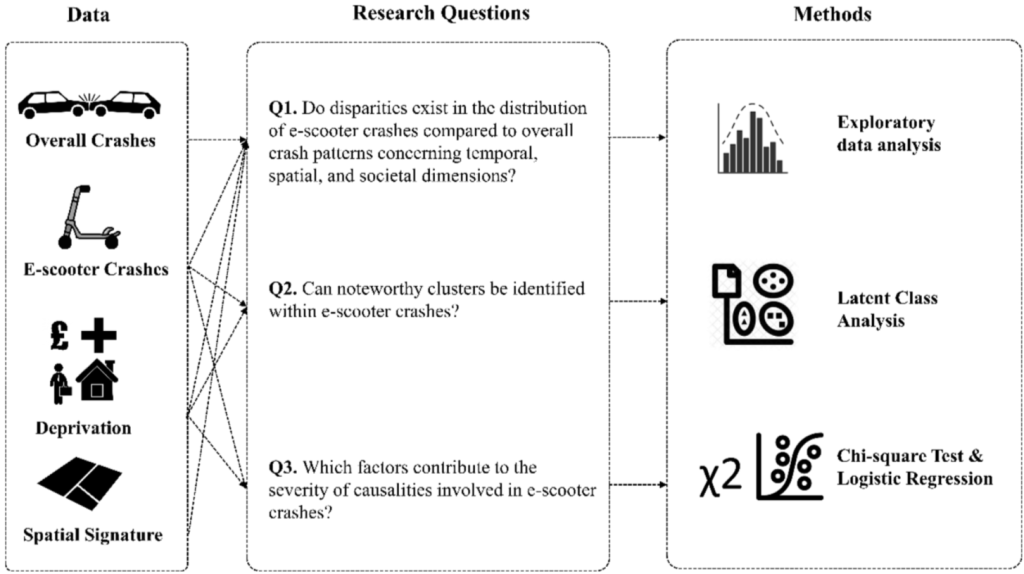
This study investigates the spatial patterns and severity determinants of e-scooter crashes in the UK using nationwide crash data. We identify distinctive spatiotemporal patterns, three crash typologies, and key risk factors, showing that older riders, late-night crashes, rural locations, and deprived communities are associated with higher crash severity. The findings provide evidence for targeted safety interventions and more equitable micromobility policies.
This study examines how gender, age, and their intersection shape ride-hailing adoption across travel purposes in Chengdu, China. Using structural equation modelling with 1,006 survey responses, it shows that age plays a stronger and more consistent role than gender, while gender effects are mostly indirect and mediated by income. The findings further reveal that older women face compounded disadvantages in adopting ride-hailing services.
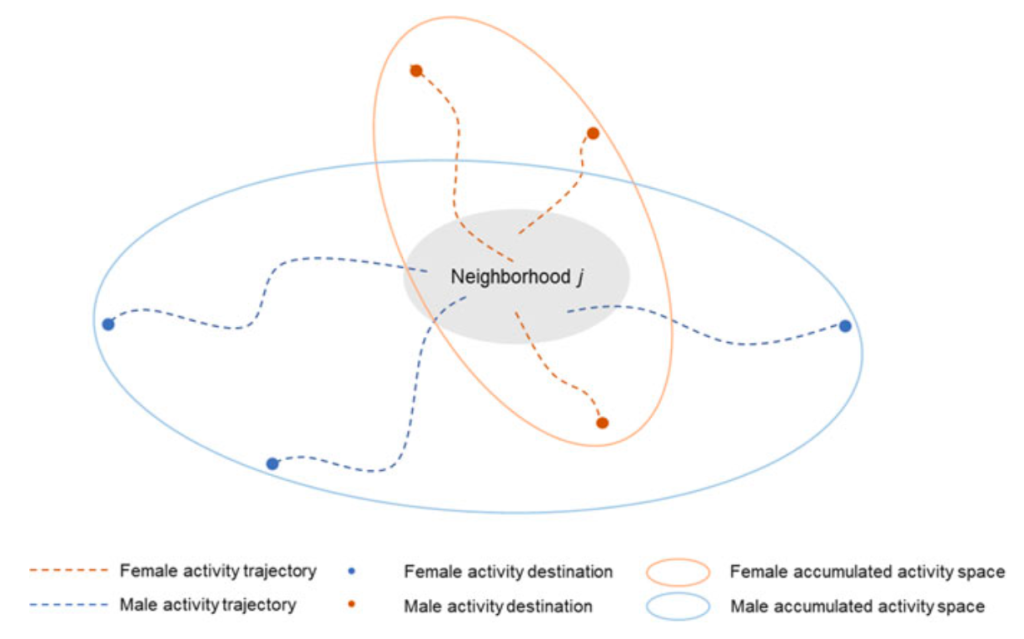
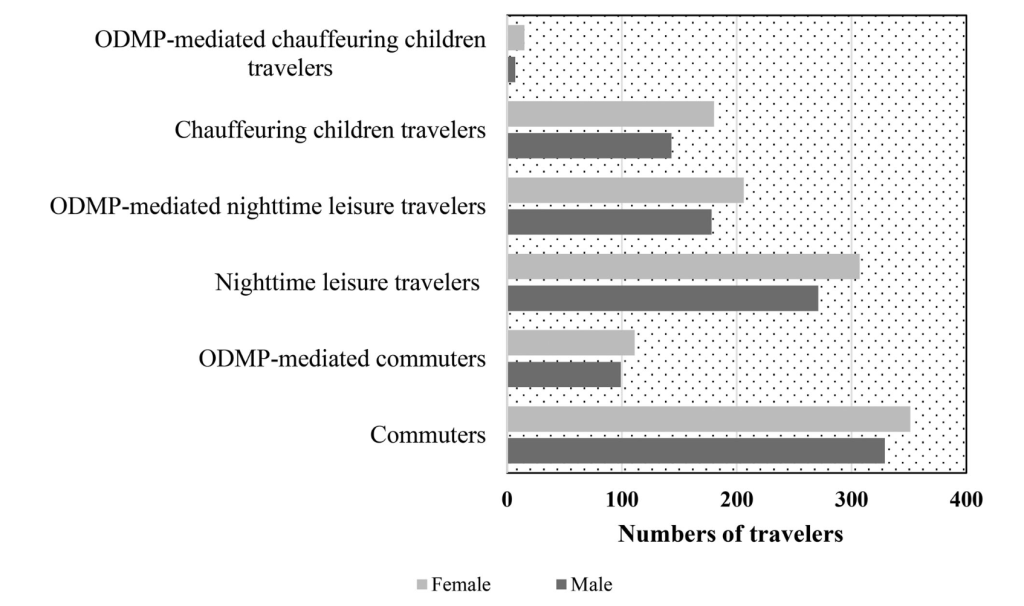
Using Chengdu survey and mobile phone data, this study shows that ride-hailing both helps and limits women’s mobility. It gives some women, especially those with children or fewer transport options, more flexibility, but it also reflects deeper constraints in public transport, car access, affordability, and gendered daily responsibilities.
This chapter explains MaaS as an integrated approach to urban travel, distinguishing it from multimodal transport and mobility-on-demand. It reviews the smart technologies behind MaaS and considers how they may improve accessibility, reduce car dependence, cut energy use and emissions, and free urban space for more sustainable, intelligent city development.
This article questions whether ride-hailing platforms are truly gender-neutral. Based on a Chengdu mobility survey, it shows that platform use is shaped by income, car access, childcare, and safety concerns. Rather than removing gendered mobility constraints, on-demand platforms often reproduce them through everyday digital and household power relations.
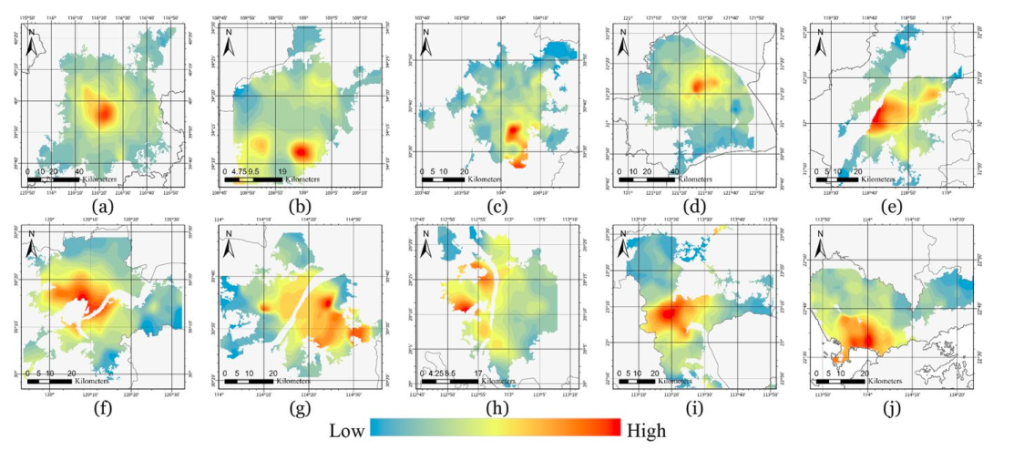
Using housing transactions and POI-based urban function data from ten large Chinese cities, this study shows that housing prices are shaped by both city form and nearby services. Compact, denser cities tend to have lower average prices, while access to jobs, hospitals, and schools raises prices within cities.
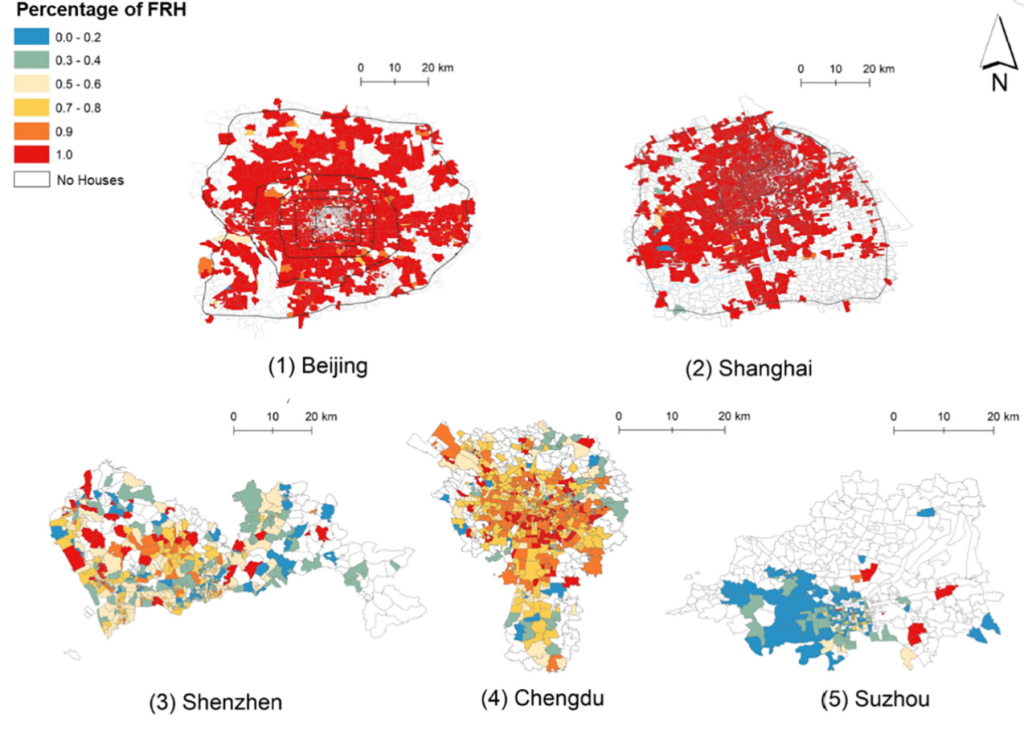
This study examines how rental housing financialisation reshapes rents in five Chinese cities. It shows that asset-light platforms tend to raise nearby rents by reducing normal rental supply, while asset-heavy models can lower rents through neighbourhood disamenities. The findings reveal how state policy and financial capital jointly reshape housing affordability.